
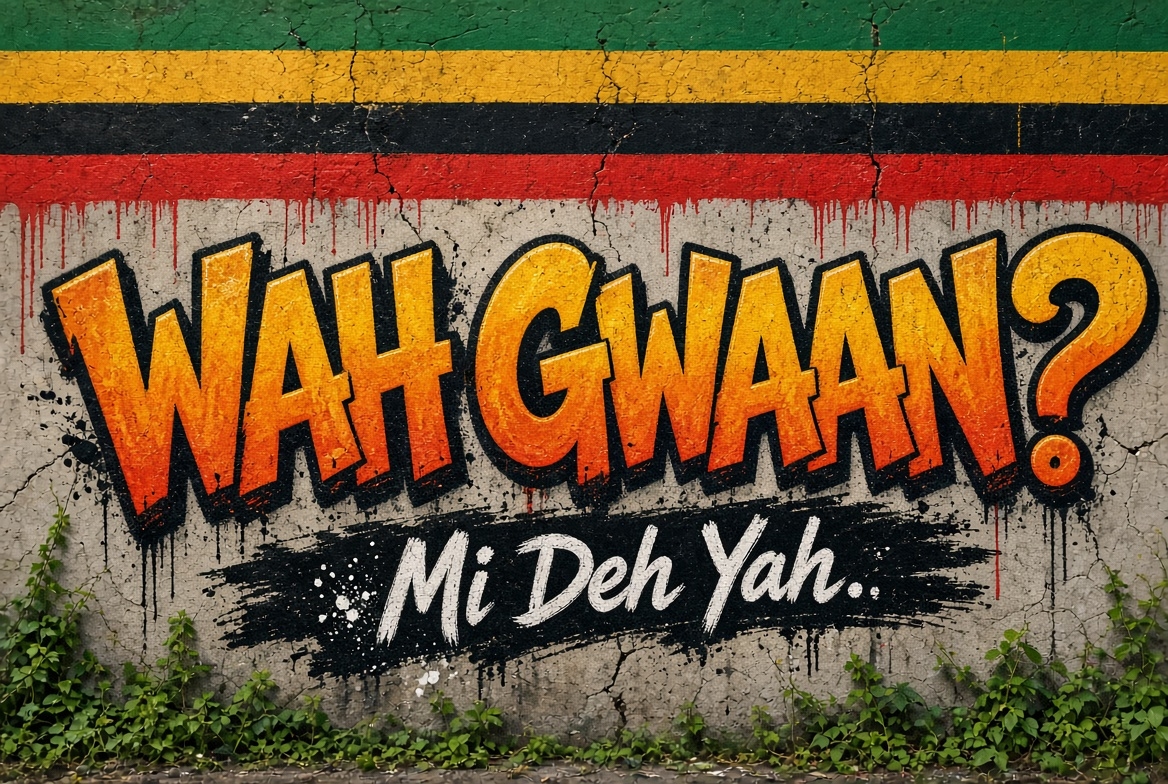
“Wah gwaan” gets you in the door, but it’s not going to carry a whole conversation. Patois has its own rhythm and logic, and picking up a handful of everyday phrases — beyond the ones every tourist learns — goes a long way, both for getting around and for showing you’re actually paying attention.
Start with greetings and small talk. “Everything criss?” is a casual check-in, roughly “everything good?” “Mi deh yah” is the classic reply to “how are you” — literally “I’m here,” which says more about the local attitude toward complaining than it might seem at first. “Likkle more” is how people say goodbye when they mean “see you soon,” not a real timeframe.
For getting around, “Weh yuh ah go?” means “where are you headed,” something you’ll hear from route taxi drivers sizing up whether your stop is on their way. “Mi soon come” is a phrase to understand more than use — it rarely means “soon” in the way outsiders expect, and it’s said with total sincerity every time.
Food and hospitality bring their own vocabulary. “Nyam” means to eat, as in “come nyam” — an invitation, not a demand. “Wah kinda food dat?” is a fair question if something on a menu looks unfamiliar; most vendors are happy to explain. And if someone offers you a taste of something before you’ve ordered, that’s just how business gets done here — take it.
A few more worth knowing: “Ya man” for agreement, “Mi deh pon it” for “I’m working on it,” “Big up” for showing respect or appreciation, and “Ital” if you’re looking for Rastafari-style plant-based food, which is its own specific culinary tradition worth trying at least once.
None of this makes you fluent, and nobody expects it to. But using even a few of these naturally — not performing them, just dropping them into normal conversation — tends to shift how people respond to you, from “tourist” to “someone who’s actually here.”
Read next
More stories from the island.
The Wharf Estate: A Waterfront Escape in Clarendon With Boat Rides, ATVs and Live Entertainment
If you're looking for a place in Clarendon where you can enjoy outdoor activities, waterfront views,…
Eggs &…: Kingston’s New Breakfast Spot Is Putting a Jamaican Twist on the Morning Meal
Kingston has no shortage of places to grab breakfast, but a new spot on Lady Musgrave…
A Full Day of Adventure in Montego Bay: What to Expect From a Chukka Excursion
If you're staying in Montego Bay and want to spend a day doing more than sitting…
A Stylish New Restaurant Where Dinner Turns Into a Night Out
Finding a restaurant in Kingston that feels like more than somewhere to simply sit down, eat,…